The Manufacturer’s Guide to Metal Labeling


Unplanned downtime now costs the world’s 500 largest companies an estimated $1.4 trillion a year, about 11% of revenue, according to Siemens’ 2024 True Cost of Downtime analysis. Knowing exactly which asset is which is the first line of defense, and that’s exactly what metal labeling delivers.
Metal labeling is the practice of attaching durable metal tags, plates or labels to equipment and assets so they can be identified, tracked and managed for the asset’s full service life. Manufacturers choose metal over paper, vinyl or polyester because anodized aluminum and Metalphoto nameplates stay legible through heat, chemicals, UV and abrasion for 20 years or more.
This guide explains what metal labeling is, compares the main substrates (Metalphoto, anodized aluminum, stainless steel and brass) and shows how to pick the right metal label for asset tracking, safety and compliance.
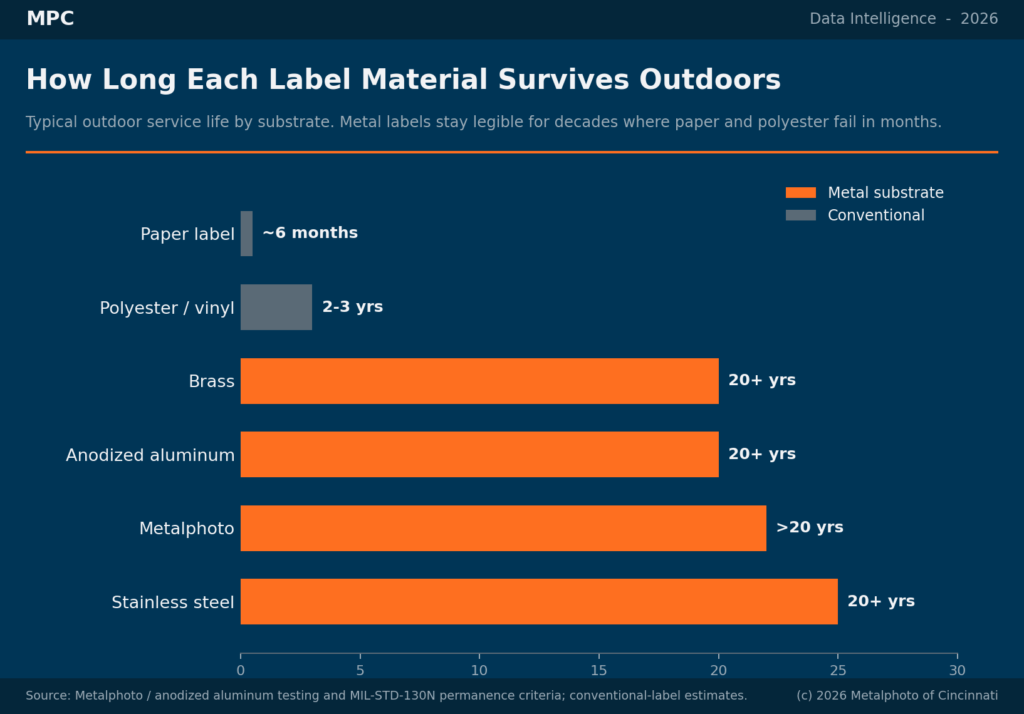
Typical outdoor service life by label material. Source: Metalphoto / anodized aluminum testing and MIL-STD-130N permanence criteria.
Metal labeling is a tagging method that businesses use to add durable labels to machinery or equipment. Sometimes this is for tracking assets, while other times it’s for safety, compliance or educational purposes.
Metal labels for equipment are a widely-used method for identifying products, such as machinery and equipment in industrial applications. Metal labels and tags display important safety and operational information, including:
While manufacturers can choose between many different substrate options for their labels, metal is the most popular option because it’s more durable. This means the information will be legible for a longer period of time, which helps manufacturers reduce costs while improving compliance.
Depending on the substrate, metal labels come in a variety of sizes, shapes, colors and thicknesses. MPC offers customizable metal labels and tags to meet a variety of different use cases in manufacturing. To get the most value out of your metal labels, it’s important to choose the right substrate for your use case, budget and needs.

MPC’s Metalphoto® labels and tags are created from the most durable anodized aluminum substrate available. Graphics are sealed beneath a sapphire-hard anodic layer of aluminum, which creates an impenetrable surface.
Our Metalphoto® labels and tags are rated to survive outdoors for over 20 years, even in extreme conditions, in line with the permanence criteria of MIL-STD-130N, the U.S. Department of Defense identification-marking standard.
Metalphoto® labels and tags can be purchased as a rigid or foil option. Foil Metalphoto® labels are thin and flexible, which makes them easy to attach to textured or contoured surfaces like pipes or valves.
Rigid Metalphoto® labels come in various thicknesses for increased performance in the toughest conditions. You can pre-print the labels so they arrive factory-ready, or choose blank tags to customize on-site.
Anodized aluminum labels and tags are a cost-effective alternative to Metalphoto®. While not as impenetrable as Metalphoto®, anodized aluminum is still very durable. This gives it excellent resistance to:
Anodized aluminum labels and tags can also be flexible or rigid, which will depend on the equipment or machinery you want to label.

Stainless steel is another strong metal labeling option that withstands corrosion, chemicals, and high heat. Different grades of stainless steel are suitable for a wide variety of applications.
MPC offers three types of stainless steel:

Brass labels and tags are a decorative yet durable option for manufacturing labels. Brass labels work well both inside and in harsh outdoor environments. This metal labeling substrate offers excellent resistance to:
Brass is a low-friction metal that won’t generate sparks, so this metal substrate is a safer option for environments with electrical components, fire or explosives.
●MPC
Question 1 of 4
| Substrate | Best for | Outdoor life | Relative cost |
|---|---|---|---|
| Metalphoto® | Harsh, long-life, mission-critical and DoD/MIL-STD-130 marking | >20 yrs | $$$ |
| Anodized aluminum | Durable general-purpose labels at a lower cost | 20+ yrs | $$ |
| Stainless steel | High heat, corrosion, marine, food processing | 20+ yrs | $$$ |
| Brass | Decorative plus durable, spark-safe, electrical or explosive areas | 20+ yrs | $$$ |

Metal labels are durable and reliable, which makes them ideal for permanently identifying assets exposed to harsh weather conditions. Rain, snow, ultraviolet radiation and extreme temperatures can damage polyester or vinyl labels, which renders the identification useless in just a few months.
Because metal is more durable than plastic, metal substrates resist environmental damage, impact damage and abrasion from dirt.
Because metal labeling is stronger and more resilient, many organizations choose this permanent option for their products or equipment. Some industries actually require it.
The U.S. Department of Defense requires permanent identification marking on machinery and other assets under MIL-STD-130. Each item must carry a machine-readable 2D Data Matrix barcode and be registered in the DoD IUID Registry. For background on why durable marking matters in the field, see this RFID and identification reference.
The federal standard spells out exactly how durable that marking has to be:
“The marking shall be as permanent as the normal life expectancy of the item and be capable of withstanding the environmental tests and cleaning procedures specified for the item to which it is affixed.”
– Source: MIL-STD-130N, U.S. Department of Defense
That is precisely why anodized aluminum and Metalphoto are specified for these assets: they meet the permanence bar that paper and polyester cannot.
While metal labeling often have a higher initial cost than conventional materials, opting for metal can save money in the long run. Since metal labels are more durable than plastic, polyester or paper, they have a longer expected lifetime. The information remains easily readable and your labels will rarely need replacing.
Using metal for identification labels provides greater safety and security because it is nearly impossible to remove or alter the information on these tags. For manufacturers with a large number of expensive assets, permanent metal labels help you stay compliant with tamper-resistant labels and keep your manufacturing sites secure from sabotage.
Whether in a factory or a warehouse, manufacturers need to track assets between locations and departments. Standardized metal labels help you keep accurate inventory of your equipment, machinery and other assets across all locations.
Metal labels cost more up front than paper or polyester, but they win on total cost of ownership. A paper or vinyl label that fails in a year has to be reprinted, reapplied and re-inspected. A single unreadable safety or asset tag can trigger downtime, a failed audit or a lost asset.
Anodized aluminum and Metalphoto labels are rated for 20 or more years of service, so one metal tag often outlives a dozen paper replacements. With unplanned downtime costing manufacturers a median of about $125,000 per hour (ABB Value of Reliability survey), a permanent, always-scannable metal label that keeps maintenance and asset records accurate pays for itself the first time it prevents a misidentified part or a repeat site visit.
Metal labels are ideal for any industry that uses heavy equipment, including construction, military, aerospace and transportation. Manufacturing is no different. From property identification tags to hazardous material warning labels, manufacturers use metal tags in a variety of ways.
Here are four of the most common.
Every manufacturer converts raw materials into finished goods that they push through the supply chain. As you scale up production, it’s a good idea to generate labels for these goods, especially if you manufacture heavy machinery yourself.
Metal product identification tags allow manufacturers to track nearly every data point on a product, including its source materials, manufacturing date and employee activity. This makes it much easier to identify quality issues or simplify the recall process if they find an issue with a product.
Manufacturing is a dangerous job, and a single misstep can cause catastrophic injuries. Whether you’re required to follow certain safety regulations or you follow safety best practices out of an abundance of caution, proper labeling is a must to keep your employees safe.
Paper safety labels save money in the short term, but they aren’t built to last, which puts you at risk of unreadable labels, employee injuries and litigation. Metalphoto®, anodized aluminum and stainless steel labels are all suitable metal labeling options for industrial and heavy equipment applications.
Metal labels and tags are a crucial part of asset identification and tracking in the manufacturing industry. Paired with a solid asset tracking system, metal labels help manufacturers manage equipment, tools and machinery across all their locations.
This is why manufacturers need to track assets with scannable labels that make it easy for employees to submit error-free reports, speed up check-in and check-out, and leave a paper trail that can recover lost assets. Unlike other materials, durable metal labels won’t fade or rub off with regular use.
Factories and warehouses often contain valuable equipment that requires frequent maintenance. Metal equipment tags are ideal for tracking repairs and locating individual parts and pieces in a manufacturing plant.
Instead of conducting maintenance on a predetermined schedule, your team can use a maintenance tracking system for predictive maintenance, servicing only the equipment that needs it and saving time.
Steel producers face one of the harshest labeling environments in manufacturing. Billets, coils, plates and finished bar move through scale, heat, water quench and outdoor yards, which destroys paper and polyester tags within weeks.
Anodized aluminum and Metalphoto labels withstand these steel-mill conditions and stay scannable from the mill floor to the customer’s receiving dock. For hot or high-abrasion steel handling, stainless steel tags rated for high heat and corrosion are the most durable option.
Many steel mills attach metal tags with serial numbers and 2D barcodes to each heat or coil so the steel can be traced to its melt, chemistry and certification, which makes metal labeling central to traceability in manufacturing and shipment accuracy.
As a manufacturer, it’s important to optimize time, materials and costs to stay competitive. Metal labels are a solid investment, but it’s still worth getting as much value from that investment as possible. Follow these tips to optimize your metal label ROI.
Always consider the environmental demands of the workplace before choosing a metal substrate. While most metals are very durable, some like Metalphoto® are especially suited for rugged environments. Stainless steel is an ideal choice for food processing equipment, while brass might be best where there are explosive risks present.
The right attachment method depends on the surface and the environment. Flat, accessible surfaces suit pressure-sensitive adhesive metal labels, while permanent installs use rivets, screws or mechanical fasteners through pre-drilled holes.
Curved or textured surfaces such as pipes, valves and motor housings call for thin, flexible foil metal labels that conform without lifting. High-vibration or high-heat equipment is best served by welded or banded stainless steel tags.
For outdoor or washdown assets, metal labeling should be paired with an industrial adhesive or fastener rated for the same temperature and chemical exposure as the asset.
If you want to order blank metal labels and print them in-house, make sure you have enough label printers on hand at each location before you order the blanks. This makes it much easier to print and apply the labels as soon as they arrive at your facility.
Human-readable labels are important, but human error can slow down some processes. Opt for metal labels that are both human- and machine-readable. That means every tag needs a text-based description for people and a QR or barcode for computers to read. It’s easy to generate QR and barcodes from your asset tracking software, and these codes make maintenance, asset tracking and product identification much easier.
Federal asset-tracking rules make the same point about machine-readable marking:
“IUID provides a standards-based approach to establish a UII encoded in a machine-readable two-dimensional data matrix barcode that serves to distinguish a discrete item from other items.”
– Source: 32 CFR § 273.9, U.S. Code of Federal Regulations (DoD)
A durable metal label is what keeps that 2D barcode scannable for the asset’s entire service life.
Metal labeling gives manufacturers a durable, long-lasting identification solution that can withstand even the most challenging environments. MPC’s metal labels and tags are exceptionally durable, which makes them the preferred choice for indoor and outdoor applications. MPC manufactures both pre-printed and blank labels that meet stringent government and industry standards.
Contact MPC today to find the best metal labels for your business.
Metal labeling is beneficial because:
The right substrate depends on your budget and needs. These are some of the most popular metal substrates for manufacturers:
Yes. Metal substrates resist rain, snow, UV radiation, extreme temperatures, impact and abrasion. Metalphoto and anodized aluminum labels stay legible outdoors for more than 20 years.
Properly applied metal labels last for decades. Anodized aluminum and Metalphoto labels are rated for more than 20 years of outdoor service, and stainless steel resists high heat and corrosion for a comparable lifespan, which is why metal is specified for assets expected to stay in service for many years.
Yes. The U.S. Department of Defense requires permanent identification marking under MIL-STD-130, typically a machine-readable 2D Data Matrix barcode on a durable metal plate or label that is registered in the DoD IUID Registry.
Our sales engineers are experts in automatic asset tracking, tagging and identification,a nd can answer all your questions. Get in touch now.
Lets Talk ›Enter your information and get a free guide that will give you a detailed overview of metal labeling, its advantages over alternative label materials, and all the best practices for using metal labels in your own business or organization.