The Ultimate Guide to UL Labels and Marks

Equipment safety is a broad requirement across industries. Not only are there individual requirements for specific product types and applications, but there are also regional considerations.
That’s why many commercial equipment manufacturers will mark their products with certification logos.
These logos, known as “marks,” indicate that their products are certified by a governing or standards-issuing entity as safe and ready for use. These markings are important for inspectors, end-users, and the general public because they standardize compliance and safety information.
In fact, demand for labeling is on the rise. The market for industrial labels is projected to grow at a CAGR of 6.4% from 2025 to 2029, with growth happening largely thanks to demand for eCommerce products and increasing regulatory scrutiny.
There are over twenty nationally recognized testing laboratories, but Underwriters Laboratories is the most well-known in North America. The Underwriters Laboratory (UL) develops safety, quality, and sustainability standards for equipment manufacturing.
Employees using this equipment need to understand its markings to stay safe. UL labels and marks help employees quickly identify compliant equipment and provide a reference for its upkeep and ongoing maintenance needs.
Not only should businesses buy compliant equipment, but they must also keep the labels in compliant condition. Unfortunately, that’s not always the case. Data from a UL field evaluation study showed that 63% of the equipment inspected had deficiencies, with some posing serious hazards.
In this guide, we’ll explain the meaning and proper use of UL markings. We’ll also explore how UL testing differs from other safety standards, what the UL standards cover, how to interpret different labels and marks, and how manufacturers can stay compliant.

Equipment may have several different markings to designate compliance with certain standards. Variations among countries, regions, product types, and certifying organizations can also add some complexity. Generally speaking, the markings on a product indicate which regions it can be sold in, or the energy and safety benchmarks it was tested against.
In addition to UL, here are some other common commercial equipment certification markings:
The table below shows common commercial equipment certification markings, their regulatory authorities, and what they do.
| Certification/Marking | Regulatory Authority | Industry/Coverage Area | Primary Function |
| NSF Mark | National Sanitation Foundation (NSF) | Food service industry | Certifies products to high standards of quality and safety. Ensures compliance with sanitation regulations through regular auditing. |
| CE Mark | European Union | Product manufacturing within the EU | Ensures compliance with EU directives for product safety, health, and environmental protection. |
| CSA Mark | Canadian Standards Association (CSA) | Canadian safety and compliance standards | Certifies products to meet Canadian regulatory requirements, often overlapping with NSF and UL standards. Verification with local professionals may be needed. |
| ETL Listed Mark | Edison Testing Laboratories (ETL) | Electrical, gas, and product safety | Conducts testing and certification for compliance with North American safety and performance standards. An alternative to UL, NSF, and CSA certifications. |
| FCC Mark | Federal Communications Commission (FCC) | Telecommunications and electronic devices in the U.S. | Regulates radio, TV, cable, and satellite communications. Ensures electronic devices operate within approved radio frequencies and do not cause interference. |
| UL Listed or UL Recognized Mark | Underwriters Laboratory (UL) | Equipment manufacturing and safety standards | Develops safety, quality, and sustainability standards. UL markings help employees identify compliant equipment and guide maintenance for safe use. |

The Underwriters Laboratory started certifying equipment in 1988. However, the organization’s scope and influence have increased significantly over the past 30 years. Today, over 22 billion products receive UL labels each year.
The Underwriters Laboratory maintains a catalog of over 100 standards and provides testing, inspection, and certification services to manufacturers and businesses throughout the US.
The UL plays a major role in many industries, but it’s especially active in the food and beverage industry. These are a few of the many solutions it provides to businesses operating in food services:
UL is a Nationally Recognized Testing Laboratory (NRTL), which means it upholds the highest standards expected by OSHA. This standard is becoming more popular because of the demand for anti-counterfeiting technology; in fact, counterfeits cost businesses $225 billion annually in the US alone.
Many businesses are also embracing UL markings because of either customer or regulatory demand for greater oversight. Sustainable labels are growing at 7.5% every year and are projected to hit $18 billion by the end of 2025.
Other organizations, such as ETL, are also considered an NRTL, and manufacturers often use their markings interchangeably with UL. A company may choose one particular NRTL marking for their equipment due to the testing schedule available, certification costs, or because consumers more widely recognize one certification mark in a specific market.
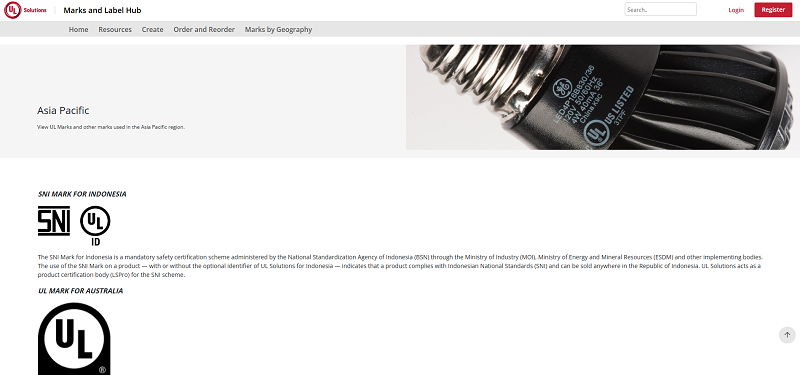
Underwriters Laboratory markings are globally recognized, although UL labels differ by region.
UL Listing and UL Recognized Component are the most common marks in North America. In Canada, products often require the cUL mark, which signifies compliance with Canadian safety standards. It’s also important to note that many products must comply with federal regulations, like those set by OSHA.
Regional certifications are more common in the Asia-Pacific region. UL offers certifications tailored for this region, including specific marks for China, Japan, and South Korea.
China requires products to meet China Compulsory Certification (CCC) requirements, Japan requires PSE (Product Safety Electrical Appliance & Material) certification, and South Korea requires the KC mark for electronics.
To complicate matters, most Asian countries have unique standards for hazardous materials. The regulatory landscape in the Asia-Pacific region often requires additional testing and certification to meet these country-specific standards.
European UL marks usually include the CE marking, which is mandatory for most products in the EU. Most manufacturers also use combination UL-EU marks to show products conform to both UL and EN standards. UL-EU marks are optional, but they can save time by verifying compliance in multiple markets.
The EU also has additional requirements. Products often need to meet compliance requirements for RoHS (Restriction of Hazardous Substances) or REACH (Registration, Evaluation, Authorization, and Restriction of Chemicals).
UL works with standards bodies in countries like Brazil (INMETRO), Mexico (NOM), and Argentina to align its certifications with local safety requirements across Latin America. For example, NOM-UL marks are used in Mexico to indicate compliance with UL standards and local NOM regulations.
As you can see, UL labels vary significantly depending on local regulatory requirements and industry-specific standards. UL certifications are often combined with local compliance marks (e.g., CE, CCC, PSE) to streamline market entry.
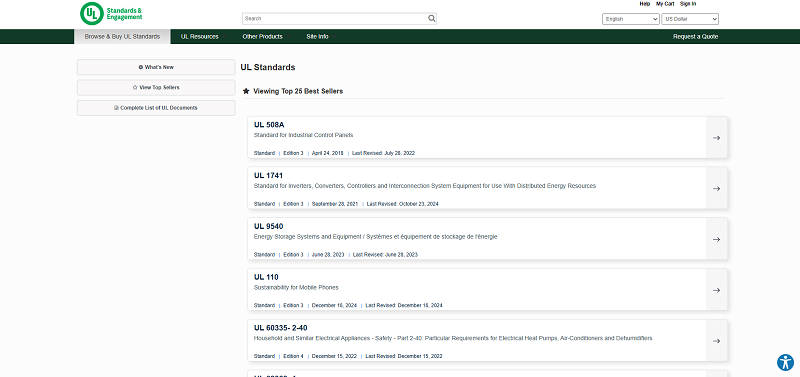
UL supports over 100 standards to certify products or operations. These are a few of the most popular UL standards, which will give you a good idea of the wide range of products that may be certified and bear a UL logo:
Some standards are also directly aligned with US standards maintained by the American National Standards Institute (ANSI). Given the frequent overlap, there is a process of continuous review and updating to ensure that all of the standards include the most recent requirements.
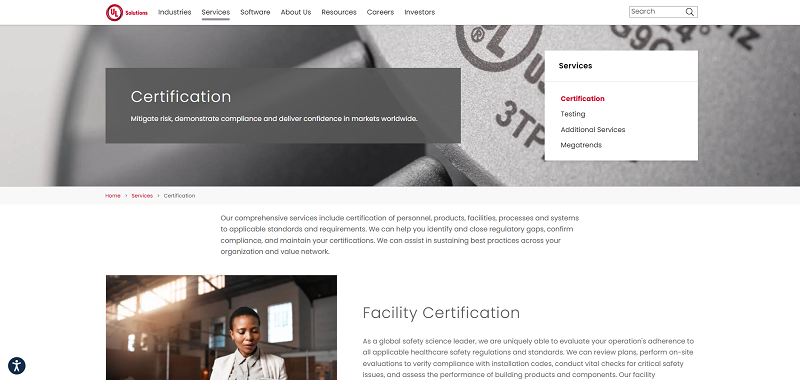
Not just any equipment can receive the UL certification. Organizations must submit a rigorous evaluation demonstrating product safety and compliance to receive a UL marking. Follow this step-by-step overview to understand the UL certification process.
First, a manufacturer applies to the Underwriters Laboratory. This in-depth application includes information on product design and specifications. Once UL receives the application, its team reviews it to define the scope of testing needed for certification.
UL creates a testing plan based on UL standards and applicable international requirements, like EN standards. Its engineers review the product’s materials and schematics to identify testing priorities and potential hazards.
UL requests prototypes from the manufacturer for testing at this stage. UL’s team puts the prototype through rigorous testing for:
UL experts analyze the test results to determine whether the product meets safety and performance standards. If the team finds deficiencies or failures, UL provides a detailed report highlighting these issues and recommending corrective actions.
Products that pass all tests receive UL certification. Once approved, UL issues a certification report and authorizes the manufacturer to use the UL mark on their product. However, if a product fails, manufacturers must address issues and resubmit for additional testing.
While the product itself may have received approval, UL also looks at the manufacturer’s production setup. UL audits the production facility to ensure consistent manufacturing processes and compliance with certified standards.
Manufacturers must also submit to regular follow-up audits to verify their continued adherence to UL standards.
Manufacturers can use UL markings once they pass a production audit or receive approval from UL. The certification includes guidelines on how and where to display the UL mark.
However, products may require re-testing if standards change or the product design is updated. It isn’t uncommon for UL to purchase certified products on the customer-facing side for random checks, too.

UL categorizes products as Type L or Type R, and its website has a handy Product iQ database to confirm which one applies to your products. For manufacturers, understanding whether a product is classified as Type L or Type R early in the process helps optimize planning, avoid unnecessary costs, and ensure smooth certification.
Type L products are those that require UL to review and approve each label design before use. These labels include important traceability information, such as an issue number, lot number, or serial number.
Because each label must be individually authorized, manufacturers have less flexibility but have more control over traceability. This process often results in higher administrative costs and longer lead times, but it’s ideal for products that require stringent tracking and batch-specific approvals.
Type R products, on the other hand, offer more flexibility. Once a manufacturer receives UL certification, they can print their own labels or order them through Authorized Suppliers without additional UL approval.
Type R labels carry a control number or a fixed four-character code associated with a UL file number. This approach streamlines production, reduces costs, and is best suited for products with standardized designs and lower traceability requirements.
Choosing the correct UL label is crucial because it affects everything from manufacturing timelines to compliance documentation.
Type L marks provide tighter oversight for products that require enhanced traceability, which is often necessary in industries like medical devices or critical electrical components.
Type R marks are best for mass production, where rigid batch-specific control is less critical.
This chart can help you quickly understand which type of UL mark is required for your product:
| UL Marking | Description | Logo Description |
| UL Listing Service | Indicates that a product has been tested and complies with UL standards based on representative samples. Commonly seen on smoke detectors, fire extinguishers, and computer equipment. | Letters ‘UL’ enclosed in a circle with ‘Listed’ below the circle. |
| UL Combined Mark | Used for products that meet UL Listing and follow-up services for the U.S., Canada, and Europe. | Letters ‘UL’ in a circle with ‘C’, ‘EU’, and ‘US’ on opposite sides. |
| UL Classification Service | Specific to products tested for use under special conditions, specific hazards, or particular properties. | Letters “UL” in a circle with “classified” above. |
| UL Recognized Component | Applied to compliant manufacturing components rather than consumer products. | Backward-facing “R” combined with “U”; variations for U.S., Canada, and both. |
| UL Functional Safety Certification | Used for equipment certified for functional safety based on a particular application, considering environmental and operational factors. | Same as UL Listed but with “functional safety” above. |
| UL Functional Safety Recognized | Applied to components certified for functional safety in specific applications. | Same as Recognized Component but with “functional safety” above. |
| UL Enhanced and Smart | Customizable UL marks that enhance traceability, often including QR codes for quick access to certification details. Available for all UL markings with additional options to combine multiple certifications. | Custom design options with QR codes for enhanced traceability. |
Other common markings include:
A product bearing this mark has demonstrated UL compliance based on a representative number of samples. Popular products using this mark include smoke detectors, fire extinguishers, and computer equipment.
The standard logo for this mark features the letters “UL” enclosed in a circle, with the word “Listed” positioned below the circle.
If a product complies with UL Listing and follow-up services for the United States, Canada, and Europe, it may bear a combined mark. This logo appears as the letters UL surrounded by a circle and the letters C, EU, and US on opposite sides of the circle.
This type of mark is specific to a particular sampling of products designated as compliant based on their use under special conditions, a limited range of hazards, or specific properties.
This logo features the letters “UL” surrounded by a circle, with the word “classified” positioned above the circle.
This is an “R”-style label applied to compliant product manufacturing components. For this reason, many consumers and equipment owners don’t see them. The logo has a backward-facing letter R combined with a U.
There are three variations of this marking: US-only, Canada-only, and Canada and the US combined.
This marking is placed on equipment designated as safe based on a particular use or application. It’s usually tied to a functional safety standard that considers environmental factors and other concerns.
This label has the same options as the UL Listed marking but includes “functional safety” above the circle.
This label is used for components certified for use in particular applications. The variations of the logo are the same as those of a standard recognized component marking, with the additional words “functional safety” above the circle.
UL now allows companies to design a customer-specific Smart Mark for their product, which includes increased traceability. For example, these markings can include QR codes for quick access to product certification information.
Smart Marks are available for all the variations listed above, with some additional options available to combine multiple designations into a single label.
The table below summarizes the various types of UL marks.
| UL Marking | Description | Logo Description |
| UL Listing Service | Indicates that a product has been tested and complies with UL standards based on representative samples. Commonly seen on smoke detectors, fire extinguishers, and computer equipment. | Letters “UL” enclosed in a circle with ‘Listed’ below the circle. |
| UL Combined Mark | Used for products that meet UL Listing and follow-up services for the U.S., Canada, and Europe. | Letters “UL” in a circle with “C,” “EU,” and “US” on opposite sides. |
| UL Classification Service | Specific to products tested for use under special conditions, specific hazards, or particular properties. | Letters “UL” in a circle with “classified” above. |
| UL Recognized Component | Applied to compliant manufacturing components rather than consumer products. | Backward-facing “R” combined with “U”; variations for US, Canada, and both. |
| UL Functional Safety Certification | Used for equipment certified for functional safety based on a particular application, considering environmental and operational factors. | Same as UL Listed but with “functional safety” above. |
| UL Functional Safety Recognized | Applied to components certified for functional safety in specific applications. | Same as Recognized Component but with “functional safety” above. |
| UL Enhanced and Smart | Customizable UL marks that enhance traceability, often including QR codes for quick access to certification details. Available for all UL markings with additional options to combine multiple certifications. | Custom design options with QR codes for enhanced traceability. |

A manufacturer must be part of the UL authorized supplier program to design, print, and fabricate labels with UL marks. This program ensures greater oversight of the labeling process and gives manufacturers and end-users confidence that the labels are accurate and compliant.
To become a UL-approved supplier, a company must follow standards related to the major steps in label manufacturing. The detailed categories for these label and mark requirements are contained within UL 969, which includes standards such as:
The table below provides a quick overview of these standards.
| Standard | Purpose | Application |
| PGDQ2 – Marking and Labeling Systems | Ensures comprehensive compliance with all aspects of label manufacturing, including adhesive, base material, printing system, and laminating or coating processes. | Applies to all label manufacturing processes, ensuring durability and regulatory compliance. |
| PGJI2 – Printing Materials | Requires routine inspection of printing ribbons and label materials for blank labels printed with thermal imaging. Ensures the safety and compatibility of materials with environmental conditions. | Applies to labels printed with thermal imaging to verify print durability and safety. |
| PGIM2 – In-Mold | Addresses labels that are mounted to plastic substrates post-printing. Ensures that labels include proper environmental warnings and adhere to specific usage guidelines. | Applies to in-mold labels used in applications where labels must integrate with plastic surfaces. |
| PGGU2 – Materials | Covers materials used for label manufacturing that do not require additional testing. Typically used for informational labels that do not carry safety or regulatory significance. | Applies to general-purpose labels that provide information but are not used for safety compliance. |
| PGIS2 – Limited Use | Allows manufacturers to produce labels for electrical equipment and enclosures with less stringent regulatory requirements. Suitable for limited-use tags and placards. | Applies to labels used on electrical enclosures and other equipment where full UL 969 compliance is not mandatory. |
Once a product earns UL certification, maintaining ongoing UL label compliance is just as important as achieving it. UL’s unique Follow-Up program ensures manufacturers follow the highest standards, so ongoing compliance efforts are a must.
Failure to properly manage labeling requirements can jeopardize your certification status, disrupt production schedules, and even lead to costly recalls or legal consequences. Follow these best practices to maintain UL label compliance after initial approval.
Manufacturers must first clearly identify whether their product is under a Type L or Type R classification. However, if you use a Type L certification, UL must approve each label before use, while Type R only requires initial approval during setup.
Type L requires more compliance documentation, so ensure your workflows support not only receiving approval for each use, but also documenting UL’s approval each time to minimize liability.
Manufacturers should create UL labels and marks that last in the product’s intended environment. Durable materials are always the gold standard, but they may not always be financially feasible.
Consider these factors to choose the most appropriate label material for your budget and environment:
Labels must be compatible with the surface material they’re applied to, whether metal, plastic, powder-coated surfaces, or composites. Adhesion testing under real-world conditions can help you confirm that the label will stay securely affixed throughout the product’s service life.
UL doesn’t just test for short-term exposure. UL 969 requires labels to withstand conditions over the intended lifespan of the product, which can be 10 years or more. Selecting materials that exceed minimum requirements can help you avoid costly relabeling, compliance issues, and warranty claims.
Using Authorized Suppliers ensures that the label materials, durability, and printing methods meet UL’s stringent standards. For example, working with an Authorized Supplier like Metalphoto of Cincinnati ensures your labels meet UL requirements for the entirety of the product’s lifespan, lasting as long as 20 years in even the harshest environments.
UL’s Follow-Up program requires auditing compliance, which means a lot of documentation. Keep detailed records of:
There’s no need to track this information manually. Many organizations rely on digitized labeling and compliance platforms to automate documentation, taking the burden off employees while simplifying the audit process.
Automated processes and digital documentation can make a significant difference in compliance, but human error can still be a concern. Train all employees involved in label creation, application, or inspection on UL compliance protocols.
Mislabeling, incorrect application, or using outdated designs are common errors that can be prevented through consistent training and refresher courses.
Don’t wait until UL conducts an audit. Self-auditing is the most effective way to identify issues early. Regularly inspect labels on finished products to confirm:
Manufacturers must maintain label integrity throughout the product’s lifecycle and be ready to demonstrate compliance during UL audits. Inspect all products at regular intervals to ensure labels are:
Maintenance is also key. Fortunately, most UL labels don’t need a lot of maintenance; in most cases, they require surface-level cleaning. In some applications, this may require industrial-level cleaners, but label maintenance is generally quick and easy.
If your facility has many labels, create an inspection checklist for your team to follow. This keeps your team on task and ensures they don’t miss critical steps, like double-checking each sticker’s serial or issue number for accuracy.
While Underwriters Laboratories is decades old, this certification method must also evolve to keep up with the times. Manufacturers, businesses, and even the general public must understand potential changes in UL markings and labels. These trends promise to revolutionize our understanding of UL labels and product safety going forward.
UL markings are already used in the technology industry; however, new standards are needed to support innovations in artificial intelligence (AI), robotics, autonomous vehicles, and Internet of Things (IoT) devices.
These products are experiencing rapid innovation, which could lead to safety concerns without proper standards. In the future, tech producers should expect to comply with more stringent standards from both UL and other governing bodies.
Smart Marks are a great addition to UL labels that offer more context to users. Their scannable features give users more detailed information, preventing potential safety hazards without the burden of printing additional labels.
These Smart Marks enable manufacturers, regulators, and consumers to instantly verify certifications, safety standards, and product applications.
There’s no need to manage UL labels manually. UL is embracing the future with its Marks and Label Hub, which simplifies the process of managing UL marks. Consult the hub to find compliant artwork, receive approval for your designs, and more.
This hub reduces manufacturers’ administrative burden while ensuring labeling consistency and accuracy.
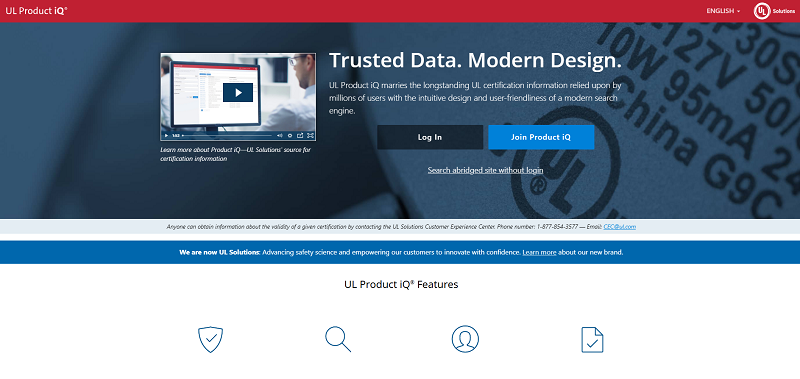
While its Marks and Label Hub is a time-saving resource for manufacturers, UL also provides a Product iQ® database that everyone, including consumers and regulators, can access.
UL’s Product iQ® database offers real-time access to manufacturer certifications, product categories, and compliance details.
Users can quickly verify UL certifications through the database’s intuitive search function. Since UL certifications are about fostering trust, this database is an integral part of the industry trend toward transparency.
Environmental responsibility is a growing concern for manufacturers across the globe. Once considered a nice-to-have, eco-friendly certifications are becoming increasingly necessary to stay ahead of regulations and keep up with consumers’ expectations.
That’s why UL has started offering certifications for sustainability. The UL Greenguard Certification verifies that products meet stringent emissions standards, while the Ecologo certification evaluates products for their all-around environmental impact.
UL labels and marks are vital for equipment in a range of industries. These crucial markings indicate that a piece of equipment meets essential safety standards.
While there are other certification options, UL certification is one of the most widely used. Importantly, products that carry UL marks are subject to UL’s ongoing Follow-Up Services, which confirm that the manufacturing process continues to meet applicable safety standards and requirements for those products.
When choosing certification labels, work with an authorized UL label supplier like MPC for durable metal equipment labels. Metalphoto® photosensitive anodized aluminum labels are a UL-approved material that offers the durability needed to withstand typical equipment operating conditions across many industries.
Thanks to their exceptional durability and suitability for harsh environmental conditions, Metalphoto® photosensitive anodized aluminum labels remain readable throughout the lifespan of your equipment. Request a free Identification Evaluation Kit now to see MPC’s quality firsthand.
In many cases, yes. UL offers combined marks, such as the UL-EU mark, which demonstrates compliance with several standards. Combining marks eliminates the need for separate labels, simplifying the compliance process for global products.
UL is unique because it verifies compliance on an ongoing basis. Not only does UL inspect production environments, but it also regularly tests certified products to ensure they match the tested prototype. Plus, UL certifications are globally recognized, allowing manufacturers to create products for multiple regions.
If a product fails, UL provides a detailed report identifying the issues and recommending corrective actions. Manufacturers can address these deficiencies, make necessary design changes, and resubmit the product for further testing.
Our sales engineers are experts in automatic asset tracking, tagging and identification,a nd can answer all your questions. Get in touch now.
Lets Talk ›Enter your information and get a free guide that will give you a detailed overview of metal labeling, its advantages over alternative label materials, and all the best practices for using metal labels in your own business or organization.