Guide to ETL Certification: Requirements, Standards, Benefits and More


In today’s industrial landscape, ensuring equipment safety and compliance is more critical than ever. ETL certification is one of the most widely recognized ways to verify that equipment meets strict performance and safety standards. Operated by Intertek, the ETL mark signifies that a product has undergone rigorous third-party testing to comply with established regulations for safety, sanitation, and efficiency.
For manufacturers, obtaining ETL certification not only ensures compliance with OSHA and other regulatory bodies but also builds trust with customers and facilitates market acceptance across industries. Whether for electrical, mechanical, or other specialized equipment, this certification serves as a key indicator of quality and reliability.
Let’s take a closer look at what ETL certification entails and why it matters.
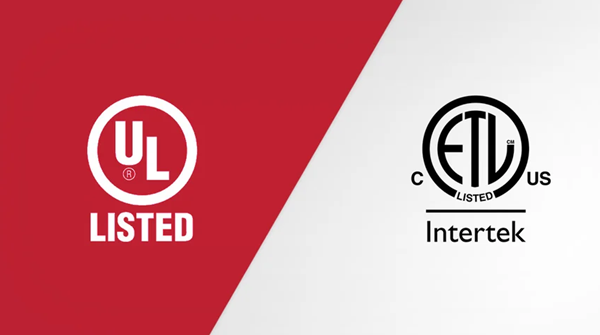
The ETL mark, short for Edison Testing Laboratories, is, in part, an equipment safety certification program operated by the laboratory, Intertek. Intertek is one of the few NRTLs (Nationally Recognized Testing Laboratories), a third-party testing program which is overseen by OSHA.
The ETL Mark includes a number of different variations that are designed to fit within the safety and/or sanitation standards of the product, including the operating and purchasing regions.
In order to be awarded the ETL mark, the manufacturer must undergo an intricate certification process, which includes a photograph, description, and a design/optional prototype submission, a quote agreement, official follow-ups, facility assessments, and more. After the process is completed, the manufacturer and/or user of the certified equipment can then affix an ETL mark using a robust equipment label that is built to last.
To obtain ETL certification, manufacturers must meet several key requirements to ensure their products comply with industry safety and performance standards. The process involves thorough testing, documentation, and ongoing compliance.
Manufacturers must provide:
By meeting these stringent requirements, companies can earn the ETL Listed mark, signifying their commitment to safety, quality, and regulatory acceptance across various industries.
Getting a product certified by a third-party laboratory is a compulsory step in guaranteeing that the user is compliant with any and all safety and sanitary regulations – but that doesn’t mean that there isn’t wiggle room when it comes to the selection of the third-party laboratory.
For instance, UL (Underwriters Laboratories) grants a competing certification to Intertek’s ETL. Both labs are OSHA-recognized NRTLs that offer similarly-tested marks that are accepted in many of the same regions. The availability of alternative options is great news for the party seeking the certification. As pricing and testing schedules can vary with demand, it’s not unusual for manufacturers to flip-flop between UL and ETL certification for identical products. That said, companies that are shipping equipment for international use are generally more likely to select the ETL certification when possible, as customs agents, code inspectors, and other officials based outside of the United States or Canada are more familiar with the ETL Listed mark (more on this next).

As mentioned, there are several different ETL certification marks that may be granted based on the design of the equipment’s corresponding standards, as well as the region in which it will be installed. One of the more versatile marks is the ETL Listed mark, the fastest-growing safety certification mark in North America. The ETL Listed mark is currently the most adaptable certification granted by Intertek. The process is similar to its classic ETL alternative, except that ETL Listed is specifically designed for both the United States and Canadian markets. Because both countries have such stringent safety laws, the certification is also recognized by many other international markets, too.
For products that will be shipped to EU countries, ETL also has a variation of Listed called the ETL-EU Mark. This certification is the first of its kind and, like Listed, the mark is recognized in a host of other regions.
Next is the ETL Sanitation Mark, which is designed to go hand-in-hand with the classic ETL certification as well as ETL Listed. The Sanitation certification has been established to ensure that both U.S. and Canada-based food, health, and beauty manufacturing sites are in full compliance with all measures relating to sanitation. To maintain this certification, the manufacturing site must undergo a series of future testing and inspections.
The ETL Verified Mark is something of an anomaly as it has been established for two distinct purposes: 1) to indicate that the product is safe and in compliance with all applicable standards, and 2) to serve as a differentiator for products and brands in competitive markets. This means that products that are ETL Verified are tested for both safety and effectiveness.
For instance, ETL Verified ensures that:
As illustrated, products and facilities that bear an ETL mark are made to undergo every OSHA-mandated testing standard. Additionally, some ETL-marked products also give companies a competitive advantage within their respective markets. Intertek, as well as all competing NRTLs, are here to provide the manufacturer with important testing processes and methods to acquire the certifications.
In today’s industrial landscape, ensuring equipment safety and compliance is paramount. ETL certification, managed by Intertek, serves as a widely recognized indicator that products have undergone rigorous third-party testing to meet stringent safety, sanitation, and performance standards.
This certification not only signifies adherence to OSHA and other regulatory requirements but also enhances customer trust and facilitates market acceptance across various industries. Manufacturers seeking ETL certification must navigate a comprehensive process, including detailed documentation, prototype evaluations, and facility assessments, culminating in the authorization to display the ETL mark on their equipment.
Obtaining ETL certification offers numerous benefits, such as
The ETL Listed mark, in particular, is gaining prominence as a versatile certification recognized not only in North America but also internationally, streamlining compliance for products destined for global markets.
Yes. Both ETL (from Intertek) and UL (Underwriters Laboratories) are Nationally Recognized Testing Laboratories (NRTLs) in the United States, meaning they test products to the same safety standards. The primary difference is simply the organization conducting the testing and certification.
No. CSA (Canadian Standards Association) is another organization that sets safety standards, particularly recognized in Canada. While ETL can test products to CSA standards (and display an ETL mark with a “C” for Canada), the certifications themselves come from different bodies.
Not exactly. NSF (National Sanitation Foundation) focuses on public health and sanitation standards, often for foodservice or water-related equipment. ETL focuses on electrical and safety standards. A product may need both an ETL safety certification and an NSF sanitation certification if it’s used in food or water applications.
Our sales engineers are experts in automatic asset tracking, tagging and identification,a nd can answer all your questions. Get in touch now.
Lets Talk ›Enter your information and get a free guide of the key design considerations applicable to industrial control panel design, including schematics, relevant regulatory standards, and design considerations relating to every facet of effective control panel design for industrial equipment and machinery.