International Traffic in Arms Regulations (ITAR) Compliance: The Complete Guide
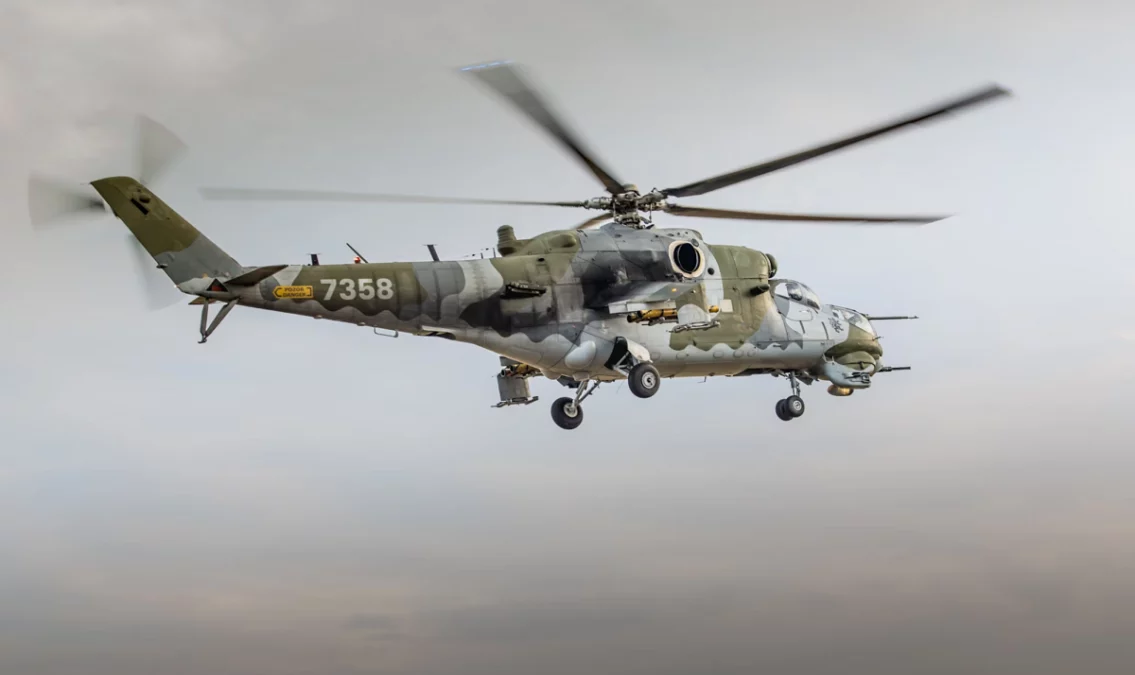


Defense technologies are incredibly sensitive. Whether you ship or manufacture these products, compliance is essential not only to keep these products safe but also to ensure business continuity. International Traffic in Arms Regulations (ITAR) is one of the most crucial guidelines for how the U.S. shares and exports defense-related products.
ITAR is a crucial regulation that protects national security. If you work as a defense contractor, manufacturer, or small business associated with the defense supply chain, the government requires 100% compliance.
In this guide, you’ll learn what ITAR and ITAR compliance are, and why they’re important, key requirements, how to overcome common challenges to compliance, and best practices to safeguard your business from costly risks.
The International Traffic in Arms Regulations are a set of rules established by the Department of State that govern the import and export of all defense-related products. The primary purpose of ITAR is national security.
These regulations prevent unauthorized foreign access to U.S. defense technology, helping maintain the military edge of the United States and protecting global stability. It also ensures that any transfer of sensitive items supports U.S. foreign policy objectives.
If an item is listed on the United States Munitions List (USML), it falls under ITAR. The USML includes 21 categories of items, such as:
The table below summarizes the 21 USML categories.
| Category | Description |
| I | Firearms, Close Combat Weapons, and Combat Shotguns |
| II | Guns and Armament (cannons, mortars, etc.) |
| III | Ammunition and Ordnance |
| IV | Launch Vehicles, Guided Missiles, Ballistic Missiles, Rockets, Torpedoes, Bombs, and Mines |
| V | Explosives and Energetic Materials, Propellants, Incendiary Agents |
| VI | Surface Vessels of War and Special Naval Equipment |
| VII | Ground Vehicles (tanks, military trucks, armored vehicles) |
| VIII | Aircraft and Related Articles (military aircraft, drones, parts) |
| IX | Military Training Equipment and Training |
| X | Personal Protective Equipment (body armor, helmets) |
| XI | Military Electronics (radars, sensors, electronic warfare) |
| XII | Fire Control, Range Finder, Optical and Guidance and Control Equipment |
| XIII | Materials and Miscellaneous Articles (e.g., stealth coatings, military fuels) |
| XIV | Toxicological Agents, Including Chemical Agents and Biological Agents |
| XV | Spacecraft and Related Articles |
| XVI | Nuclear Weapons Related Articles |
| XVII | Classified Articles, Technical Data, and Defense Services |
| XVIII | Directed Energy Weapons |
| XIX | Gas Turbine Engines and Associated Equipment |
| XX | Submersible Vessels and Related Articles |
| XXI | Articles, Technical Data, and Defense Services Not Otherwise Enumerated |
It’s important to distinguish that ITAR doesn’t just apply to physical items. Training services and intangible assets, such as designs and specifications, can fall under the jurisdiction of ITAR.
Depending on the nature of the conversation, even verbal discussions can fall under the purview of ITAR, so organizations and their representatives must understand the rule of law when speaking to their clients.
ITAR compliance is mandatory for:
Even companies not traditionally associated with defense may need to comply if they work with parts, data, or services connected to a defense article. When in doubt, contact the Department of State to determine whether your products or services fall under ITAR control.
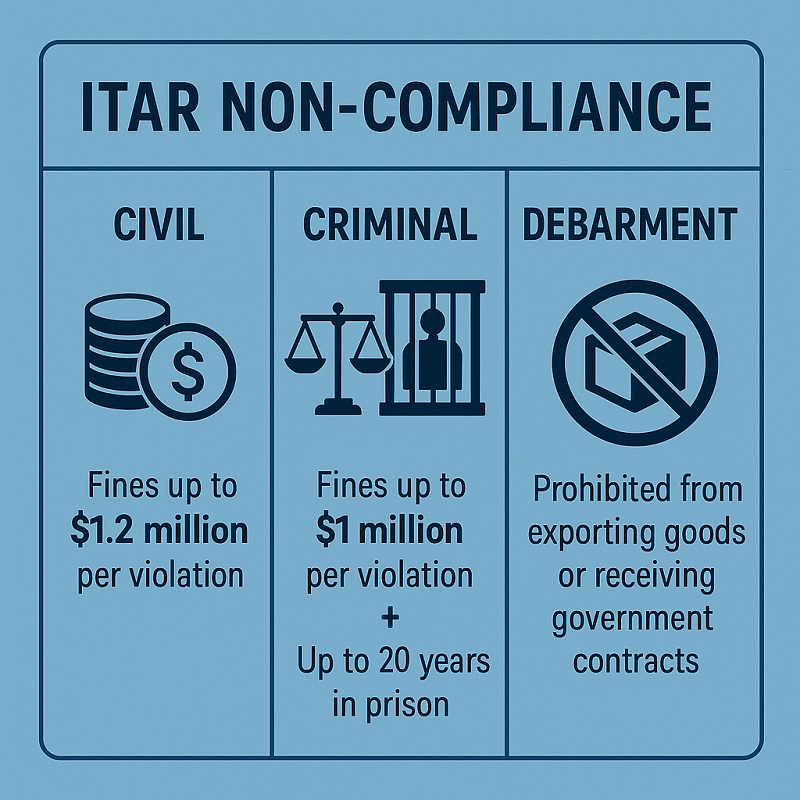
Complying with ITAR is a must for preserving national security, but on a business level, it protects your organization from costly fines and penalties. There are both financial and reputational risks to non-compliance, including:
While ITAR penalties may sound like something reserved for large corporations, that isn’t necessarily true. Small businesses, universities, and even individuals have faced enforcement actions for falling out of compliance with ITAR.
In some cases, unintentional violations, such as unauthorized email sharing of technical data, have still resulted in major fines.
Avoiding fines and potential jail time are significant motivators for staying ITAR-compliant, but there are other benefits to compliance, including:
Ultimately, ITAR compliance doesn’t just help organizations avoid legal liability. These guidelines establish a secure, resilient, and trusted business that thrives in highly regulated sectors, such as defense.
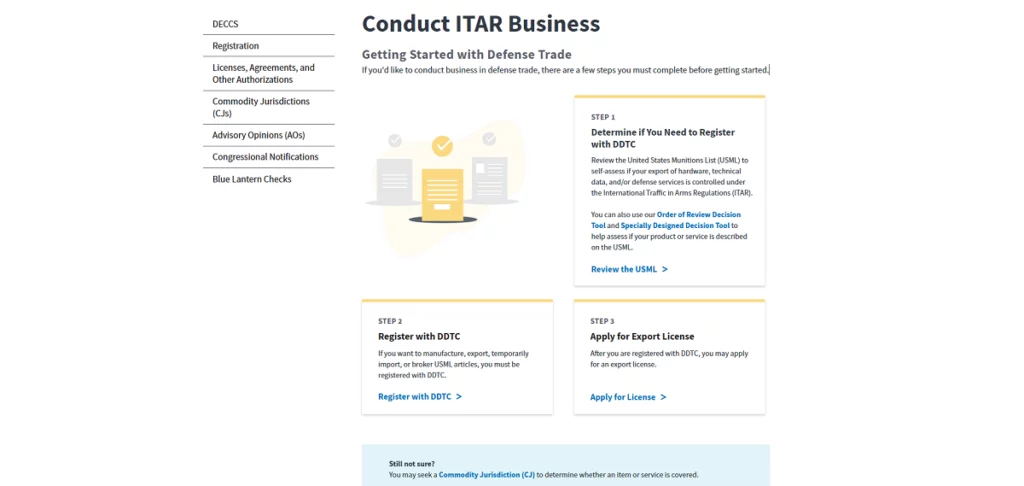
International Traffic in Arms Regulations are notoriously strict, and for good reason. This is far from an exhaustive list, but businesses dealing with defense-related products should ensure they follow these key ITAR requirements:
The table below breaks down the key ITAR requirements and what they mean.
| Requirement | Description |
| Product Classification | Determine if product falls under USML (United States Munitions List) |
| DDTC Registration | Required for manufacturers/exporters of defense articles |
| Export Licensing | Mandatory for transferring items/data to foreign persons |
| Access Restrictions | Only U.S. persons may access controlled data/materials |
| Employee Screening & Training | Must screen employees and conduct regular ITAR compliance training |
| Recordkeeping | Maintain export records for minimum of 5 years |
| Voluntary Disclosure | Must report violations proactively to minimize penalties |

Photo by Rinson Chory from Unsplash
ITAR compliance is complex, and even businesses with the best intentions can stumble. Here are some of the most common challenges companies face, along with practical ways to address them.
One of the first hurdles is ensuring that all defense articles, technical data, and defense services are accurately classified under the USML. Misclassification can easily lead to unintentional violations.
Perform regular audits and, when needed, request a Commodity Jurisdiction (CJ) determination from the Department of State to confirm proper classification.
Once you identify which products fall under ITAR, physical labeling and tracking of these defense articles are critical. Improperly labeled parts can lead to compliance issues, especially during shipping, storage, and export.
Use ITAR-compliant identification products, such as industrial nameplates, rating plates, and equipment labels, specifically designed to withstand harsh conditions without compromising legibility.
Metalphoto of Cincinnati’s ITAR-compliant labels and tags are ideal for defense and aerospace applications, offering exceptional durability while maintaining ITAR traceability and compliance.
Metalphoto® labels from Metalphoto of Cincinnati are engineered to resist extreme temperatures, chemicals, UV exposure, and abrasion—qualities critical for maintaining legibility in mission-critical defense environments.
These labels are not just rugged; they meet military specifications and have been trusted by U.S. defense agencies and contractors for over 60 years.
When defense compliance is non-negotiable, MPC’s Metalphoto® labels and tags provide long-lasting, tamper-resistant identification that supports traceability and ITAR adherence.
ITAR requires that only authorized U.S. citizens have access to controlled items and data. In today’s hybrid work environments, ensuring this across both physical sites and digital platforms can be daunting, but it’s not impossible.
Invest in strong physical security systems, encrypt sensitive data, limit access to ITAR-controlled files, and implement multi-factor authentication (MFA) for digital systems.
With strict requirements to maintain records for at least five years, companies often struggle to organize and securely store all relevant compliance documents. Automate this process with a centralized document management system designed for compliance tracking and establish clear retention policies.
Initial employee training can help ensure ITAR compliance. Even well-meaning employees can cause accidental violations if they are not properly trained on ITAR requirements.
Offer mandatory ITAR compliance training during onboarding and schedule annual refresher sessions to keep all team members up to date.
However, ITAR requirements change over time. They evolve to reflect geopolitical shifts, new technologies, and national security priorities.
Businesses and their employees must understand current ITAR requirements and stay up-to-date on any potential future changes. Failing to keep up with updates can inadvertently create compliance gaps.
Subscribe to official DDTC updates, partner with legal or compliance advisors, and review your internal policies at least annually to avoid accidental non-compliance.
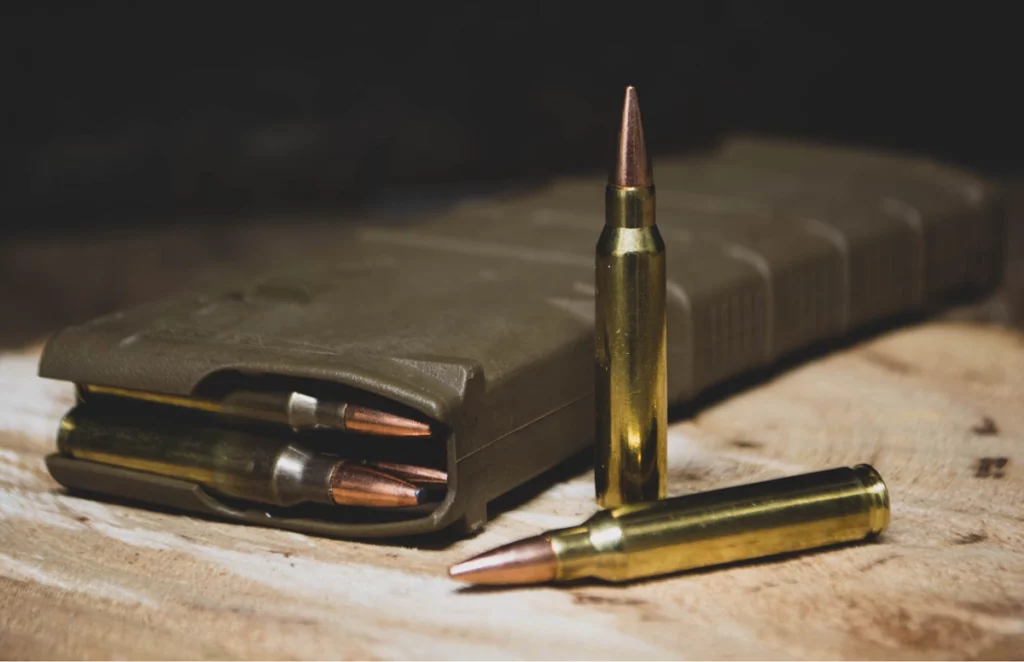
Photo by Will Porada from Unsplash
Achieving ITAR compliance is essential for any business involved in the defense sector. However, maintaining compliance requires constant vigilance and proactive management. Follow these best practices to maintain ITAR compliance in your organization.
ITAR compliance is essential to business success. Leave nothing up to chance: create a formal, structured compliance program in your organization to ensure end-to-end compliance.
Develop a comprehensive, written compliance program that outlines clear policies, responsibilities, procedures, and established escalation paths. Include clear guidance for classifying items, handling technical data, training employees, and reporting violations.
Mistakes happen, and when they do, voluntary disclosure to the DDTC often leads to more favorable outcomes. Have a plan in place to report potential violations swiftly and transparently.
Many organizations utilize compliance technology to automate ITAR-related tasks, such as mandatory training or annual audits, to ensure accountability. Consider upgrading to a digitized system to ensure your team completes these essential tasks while streamlining other requirements, like document storage, automatically.
Assign a qualified ITAR compliance officer or team to oversee ITAR adherence. They should have a direct reporting line to senior leadership and the authority to enforce compliance protocols across the organization.
If this isn’t possible internally, consider hiring a third-party vendor specializing in ITAR compliance. This approach reduces overhead and provides you with access to personalized compliance insights, as well as alerts and updates on any changes to ITAR.
Clearly label and track all ITAR-controlled articles to prevent unauthorized access or mishandling. Partnering with trusted providers like Metalphoto of Cincinnati ensures that your labeling solutions meet durability and compliance standards critical for the defense and aerospace industries.
While MPC’s labels are designed to withstand the test of time, your team should still regularly check ID labels to ensure they are in working order, especially if they are used in extreme environments.
Maintenance staff should ensure the labels are legible and free of damage or scratches. Screws or adhesives should also be in good shape, which ensures the labels will remain on the product.
Schedule periodic internal audits to review your export control processes, employee access permissions, document management, and security protocols. Self-assessments help identify vulnerabilities before regulators do.
If you have an ITAR vendor, they can likely conduct this test audit for you and offer suggestions to help you improve ITAR compliance before a real audit.
Make ITAR training mandatory for all relevant employees, not just at the time of hiring, but on an ongoing basis. Tailor training by role and ensure employees understand real-world scenarios, not just theoretical rules.
Compliance isn’t just a box-checking exercise — it must be part of your company’s DNA. Encourage employees to ask questions, report concerns without fear of retaliation, and view compliance as essential to the company’s success.
International Traffic in Arms Regulations support national security and prevent sensitive goods from falling into the wrong hands. Still, ITAR requirements are strict, and businesses must fully cooperate with these regulations or risk severe penalties.
By understanding the core requirements, anticipating common challenges, and following industry best practices, companies can not only avoid costly penalties but also unlock new business opportunities in highly regulated industries.
Investing in proactive measures, such as employee training, secure data management, ITAR-compliant identification solutions from trusted providers like Metalphoto of Cincinnati, and regular compliance audits, ensures that your organization stays ahead of regulatory changes and strengthens its reputation for reliability and integrity in the process.
See the MPC difference firsthand: Request your free ITAR-compliant label and tag evaluation kit today.
An export isn’t just physically shipping items overseas. Under ITAR, an export can include sharing technical data with a foreign person within the U.S., uploading ITAR-controlled files to a cloud server outside the U.S., or even oral communications of sensitive information to non-U.S. persons.
Yes. Foreign companies that deal with U.S.-origin defense articles, technical data, or defense services must also comply with ITAR regulations. This can include suppliers, subcontractors, or partners based internationally.
The scope of ITAR controls extends down to subcomponents, parts, and even technical assistance related to them. Even if you manufacture a seemingly minor component, if that component is part of a larger defense article listed on the USML, you must comply with ITAR.
Our sales engineers are experts in automatic asset tracking, tagging and identification,a nd can answer all your questions. Get in touch now.
Lets Talk ›