Pump Maintenance: 11 Ways to Keep Pumps Running Smoothly



Industrial pumps are built to work hard, but they won’t last if you ignore them. Whether you’re running a single unit or managing a whole facility, pump maintenance isn’t something you can afford to treat casually. A missed inspection or a skipped seal replacement can lead to leaks, lost performance, and costly downtime.
This guide covers 11 practical ways to keep your pumps running smoothly for the long haul. We’ll go over how often pumps really need maintenance, what causes them to fail, and what warning signs to watch for. We’ll also walk through everyday best practices, from following manufacturer guidelines to using durable nameplates that support safe operation and digital tracking.
Below is a quick summary of the most important steps to keep your pump in top condition. Use this list as a handy guide for routine care, troubleshooting, or when planning your next maintenance session. Each step is a proven way to extend your pump’s life, prevent costly breakdowns, and ensure reliable performance.
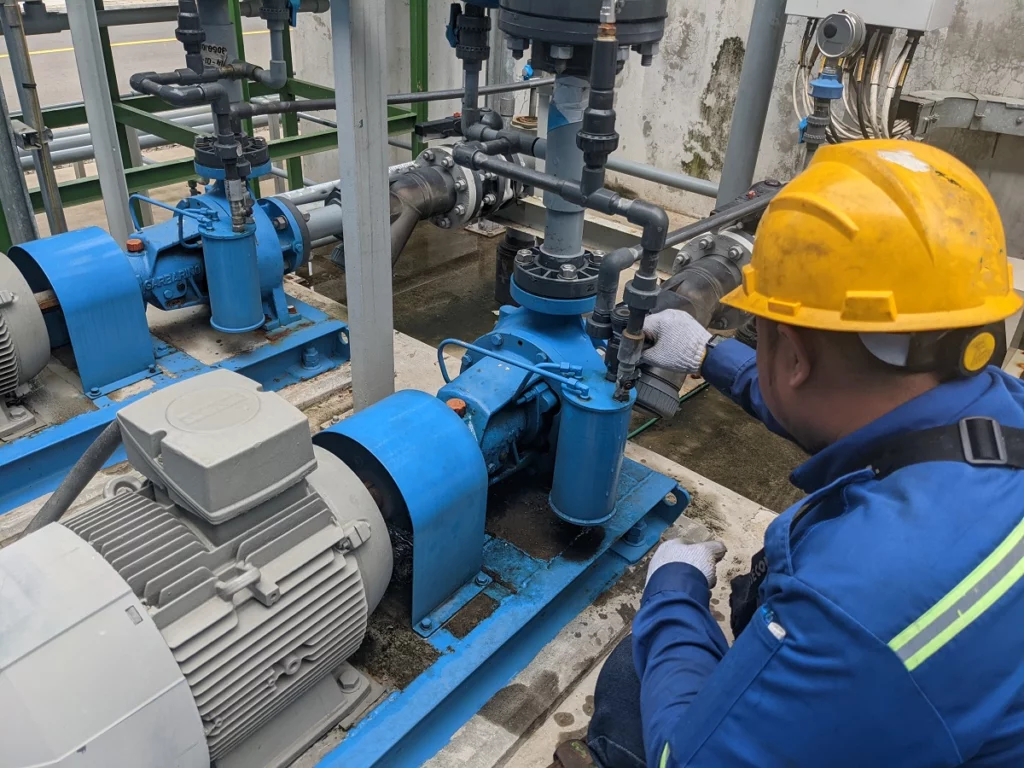
There’s no one-size-fits-all answer, but the general rule of thumb is that most pumps need routine maintenance every 3 to 6 months. This can vary depending on a few factors, though, including the pump design, application, and environment.
For example, continuous duty in a manufacturing facility will require more service than infrequent use in a clean room. Operating in high heat, humidity, abrasive/corrosive fluids, or chemicals can also damage components more quickly, shortening the service interval.
Some manufacturers will give maintenance recommendations based on run-time hours (e.g. every 3,000 to 6,000 hours). Others will give a calendar-based timeline. Follow their guidelines to catch problems before they happen and avoid unscheduled outages while maximizing the equipment’s useful life.
You can always start with the Installation, Operation, and Maintenance (IOM) manual recommendations, and then adjust as needed based on your experience and specific conditions. The table below breaks down the recommended pump maintenance frequency for different applications.
| Application Type | Recommended Maintenance Interval | Important Considerations |
| Clean water in clean room | Every 6 months | Low wear environment |
| Continuous-duty in manufacturing | Every 3–4 months (or 3,000–6,000 hours) | High usage = faster wear |
| Corrosive chemical pumping | Every 1-3 months | Check for seal corrosion and pitting |
| Abrasive slurry handling | Every 1-2 months | Inspect impellers and internal coating frequently |
It’s typical for most industrial pumps to last between 10 and 20 years with proper maintenance. As with most machines, it depends on how the pump is designed, its intended use, and the environment it operates in.
A pump that’s well-designed and operates within its specifications in a clean environment with regular service? It’s likely to last 20 years. Use the same model in a dirty or harsh application (transporting corrosive fluids, 24/7 operation, or vibration/poor alignment), and you’re likely to see closer to 10 years or less.
The type of pump also makes a difference. Centrifugal pumps that move clean water will last longer than similar pumps used for slurry, chemicals, or abrasive media. Seals, bearings, and impellers will fail first, but with proactive replacement of these wear parts the pump casing and internals can continue to function for a long time.
In many cases, the issue isn’t age but rather a lack of maintenance. Pumps fail not because they’re old, but because something was missed along the way. Regular service and being proactive in observing signs of wear and trouble are the keys to a long-lasting pump.
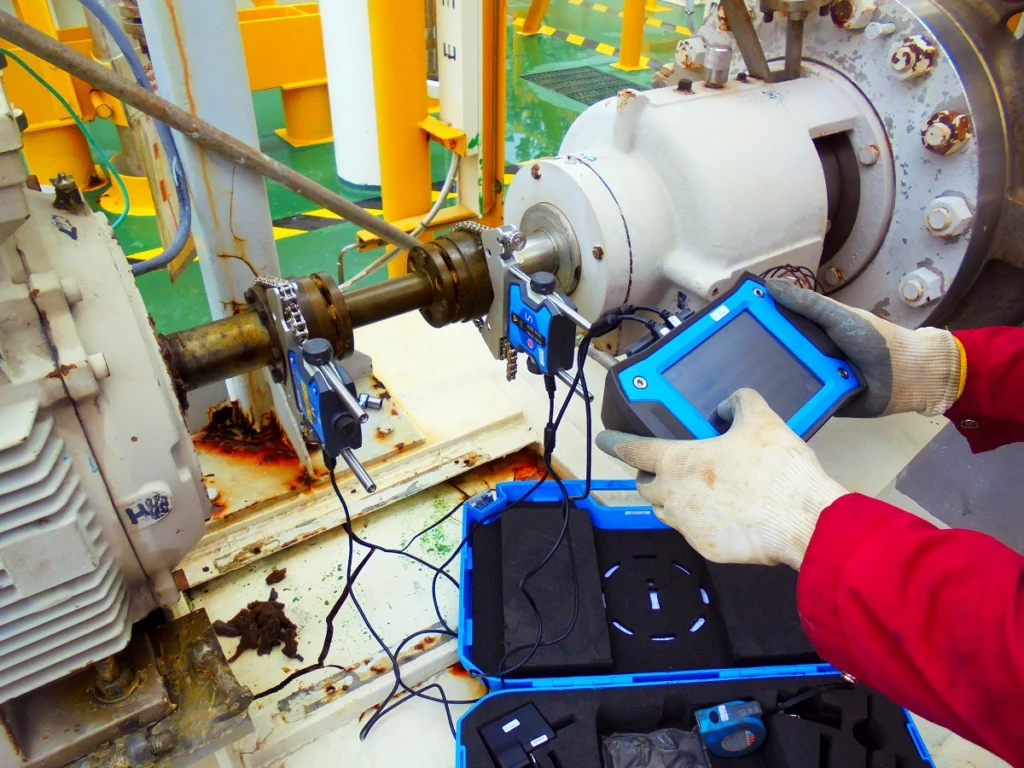
Rarely does a pump fail unexpectedly. In most cases, pump failure is the final result of what has been overlooked, ignored, or done incorrectly at the start. Some of the most frequent causes are:
A poorly installed pump (wrong alignment, base support, piping layout, etc.) is already behind the eight ball. Vibration, stress, leaks usually ensue and components tend to wear out prematurely.
Operating a pump without fluid is one of the quickest ways to ruin it. Without the necessary lubrication and cooling, seals overheat and bearings fail, and internal components can seize or crack.
When the motor and pump shafts are not in alignment, extra stress is put on the bearings and couplings. This causes premature wear, vibration and eventually failure.
Seals and bearings are high wear points. When they start to go, it’s typically just a matter of time before something more significant ensues. Leaks, overheating and shaft damage are all symptoms of seals or bearings going bad.
The formation and implosion of vapor bubbles inside a pump (generally due to low inlet pressure or high fluid temperature), causes pitting and severe internal damage. It also makes the pump noisy and reduces efficiency.
Neglecting to inspect, delaying lubrication, or ignoring early warning signs allows small problems to get out of hand. Small problems over time eventually lead to major breakdowns and expensive repairs.
The good news is that most of the above are preventable. With proper installation, inspections, and some basic training, you can keep your pumps out of the failure column and in service where they belong.
The table below highlights the most common causes of pump failure and the preventive measures that can help to avoid them.
| Cause | Description | Preventive Measure |
| Improper installation | Misalignment or poor base support causes vibration | Follow OEM installation instructions |
| Dry running | Operating without fluid causes overheating & internal damage | Use flow switches, monitor fluid levels |
| Misalignment | Shaft misalignment stresses bearings & couplings | Regular alignment checks |
| Worn seals/bearings | Leads to leaks, heat, and vibration | Replace proactively during inspections |
| Cavitation | Vapor bubbles cause pitting and noise | Ensure correct inlet pressure & NPSHa |
| Lack of maintenance | Small issues become failures without routine care | Follow a PM plan; log service activity |
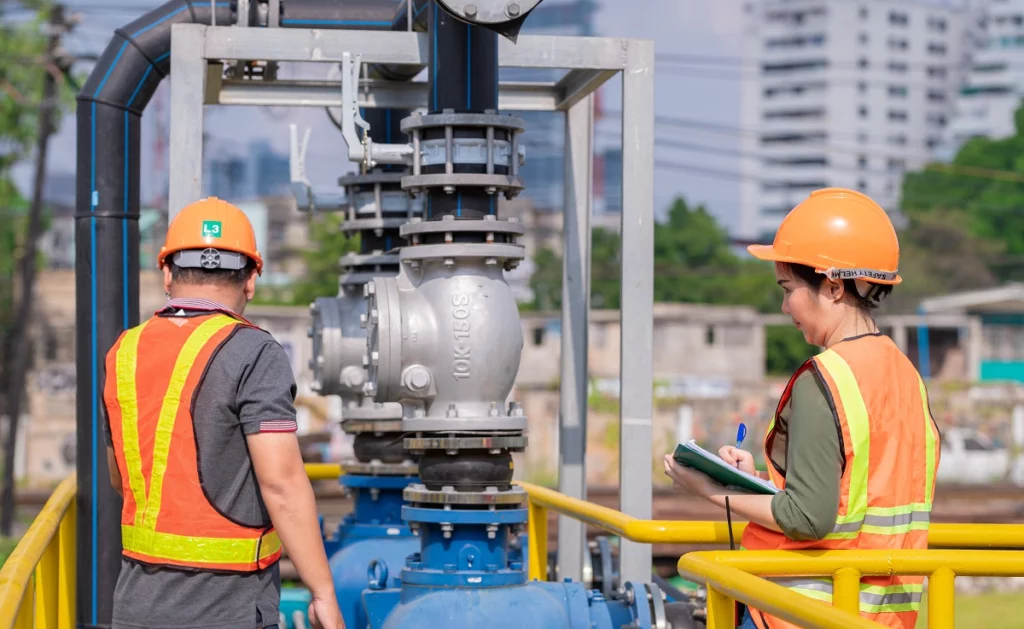
One of the most obvious tips for ensuring your pumps are operating optimally is to follow the manufacturer’s instructions. The IOM manual might seem like an afterthought, but it’s where the original equipment manufacturer (OEM) lists requirements for your pump to operate correctly and for maximum life. This can range from startup/shutdown procedures to inspection schedules, suggested lubricants, alignment requirements, and wear part replacement frequencies, to name a few.
Failure to follow these recommendations can result in issues quickly. A poor startup procedure could result in shaft misalignment or bearing damage before the pump is even operating. Neglecting inspections could allow small concerns, such as a plugged strainer or a worn seal, to lead to catastrophic failure.
And it starts before the pump is even purchased. If the selected pump is not correctly specified for the system’s gallons per minute (GPM), head, or fluid characteristics, it will be stressed. This will lead to excess wear, increased energy use, and reduced equipment life. When specifying pumps, ensure they are correctly matched to the application and reconfirm their compatibility.
If you’re only checking on your pumps when something goes wrong, you’re already behind. A preventive maintenance plan helps you stay ahead of issues before they turn into downtime.
Predictive maintenance is similar but gathers sensor data and monitors equipment to determine its condition. Preventive maintenance is strictly calendar-based. It’s more realistic than predictive maintenance for companies that aren’t operating a fully sensor-enabled plant.
How often? That depends on your pump’s workload. For pumps operating continuously (continuous-duty), a good rule of thumb is to perform maintenance every 3,000 to 6,000 operating hours. That’s about every 10 to 16 weeks. If the pump operates in harsh or dirty conditions, consider increasing the frequency.
Checklist items include, at a minimum:
Stay on schedule. Preventive maintenance programs allow you to be proactive, saving time, money, and headaches over the long haul. It’s easier to lubricate a bearing than it is to replace a seized motor. A good preventive maintenance software system can help you stay on track with your maintenance plans.
Condition monitoring offers the ability to address problems before they cause a shutdown. Predictive maintenance techniques (predictive maintenance) refer to any proactive maintenance activity that can be performed to detect equipment anomalies.
For example, rather than waiting for a failure (or, perhaps, even guessing when a failure will occur), monitoring equipment condition using one or more diagnostic tools or equipment can help identify how a pump is actually performing in real time.
Vibration analysis is one of the most common methods. It can flag early signs of misalignment, imbalance, or bearing wear, often before you’d notice anything by eye or ear.
Thermography is another useful tool. A hot bearing or motor may be detected by an infrared camera well in advance of a burnout condition. Fluid analysis may identify contamination or metal particles in the lubricating oil that indicate internal component wear that should be addressed.
Predictive techniques and tools don’t replace scheduled maintenance; they make it more effective. They enable maintenance teams to focus efforts on pumps that need attention and extend the service life of components that are still performing well. Small issues can be detected early, before they have a chance to become larger issues.
Lubrication lets the moving parts work smoothly. Always follow your pump manufacturer’s schedule for oiling or greasing the bearings and shafts. Use the correct type and amount of lubricant as too much or too little can cause problems.
Regularly lubricate every moving part, focusing on bearings, couplings, and motor shafts. Wipe away excess grease to avoid buildup. Check for dirty, old, or milky-colored grease, as this can mean contamination or too much moisture inside the pump.
If you work with harsh chemicals or high temperatures, consider using materials built for durability and resistance. For example, pumps used in industrial settings may need superior labels and plates tested for long-term durability.
Fluid flowing through your pump isn’t simply payload: it has an immediate impact on the life of your pump. Contaminated fluid is one of the quickest ways to induce wear, clogging or corrosion.
That’s why flushing is important, particularly when coming out of a shutdown period. If the pump sits with fluid inside, it can lead to buildup, crystallization, or chemical reactions which will destroy seals and internals.
This is particularly the case for pumps that are moving corrosive or abrasive fluids. You’ll want to flush out the system with a neutralizing solution or clean water depending on your application. Ensure everything is drained before the pump sits for an extended period.
You should also verify that the fluid being pumped is compatible with the materials used in your pumping system. This isn’t just about the chemical compatibility of the seals or internals, either. Even stainless steel doesn’t stand up to everything. If the fluid degrades the housing, impeller, or seals, no amount of routine maintenance will keep your pump going.
Don’t overlook anti-corrosion measures like coatings or using the right material at the outset. It’s a lot easier to prevent rust from forming than it is to deal with it once it takes hold.
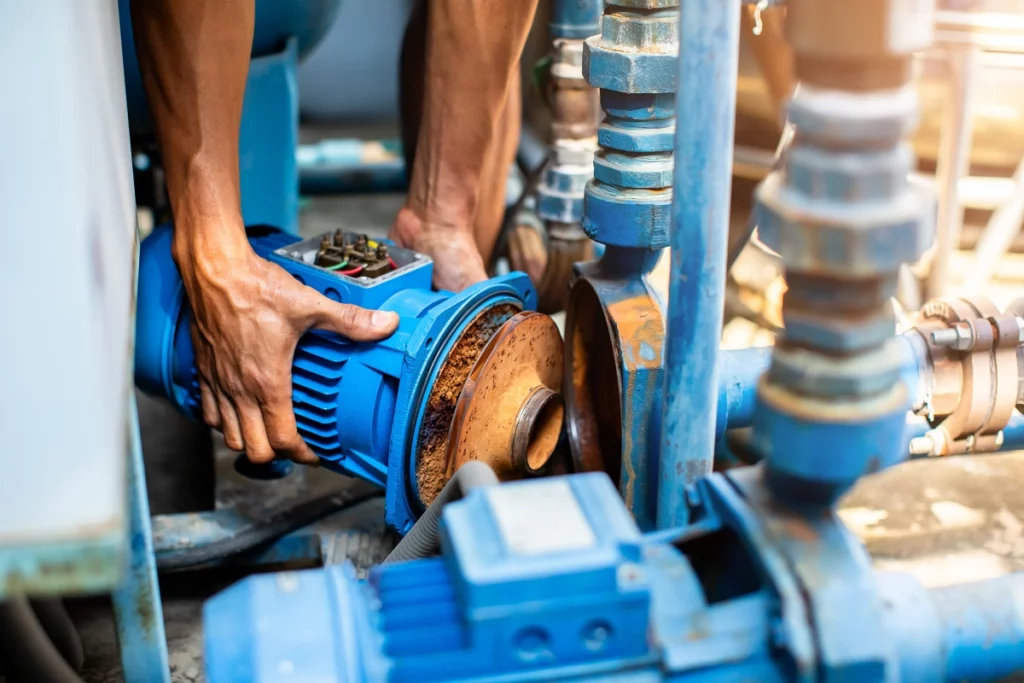
Keeping your pump clean and caring for its parts helps avoid breakdowns and keeps the system running efficiently. Regular attention to seals, gaskets, and bearings directly affects the pump’s lifespan and performance.
Dirt, debris, and buildup inside the pump can slow performance or cause clogging. To clean the pump, first shut it down and disconnect the power. Remove the pump housing to reach internal parts.
Use a soft brush, mild soap, and clean water. Scrub away deposits, paying close attention to the impeller and intake screens. Rinse parts completely and dry them before putting the pump back together.
A clean pump operates more quietly and reduces stress on the motor.
Seals and gaskets keep water, oil, or other fluids from leaking out. They can wear down over time. Inspect seals regularly for cracks, discoloration, or hardness.
Replace worn or damaged seals as soon as you notice a problem. Use only manufacturer-approved replacement parts to avoid leaks.
Steps for checking seals and gaskets:
Lubricate seals with a light layer of manufacturer-recommended grease when needed.
Bearings help the pump shaft spin smoothly. Without care, they can wear out and cause noisy operation or even pump failure.
Listen for noises such as grinding or squealing, which may mean bearings are worn. Feel if the shaft is hard to turn by hand.
Bearings should be greased according to the pump’s manual. Do not over-grease, because this can cause overheating. If the pump uses sealed bearings, replacement, not greasing, is required.
The table below highlights key tasks and a timeline for checking bearings.
| Task | How Often | Tools Needed |
| Listen for noise | Monthly | Your ears |
| Lubricate bearings | 3-6 months | Grease gun, grease |
| Inspect for play | Every service | Hands |
The key is to avoid the frantic search for parts when the pump stops working. Keeping an inventory of critical spare parts can be critical to a timely repair or rebuild, especially in the case of OEM parts, such as seals, bearings, gaskets, impellers and other wear parts.
You don’t need to stockpile a large number of parts you may never use again. You do, however, want to have those critical spares readily available that fail the most often.
What spare parts should be kept on hand? The important thing is to be prepared. If a mechanical seal fails on a Friday afternoon and you don’t have a replacement until Monday, you’re losing valuable time—and maybe more.
This is where a good asset management or equipment tracking system helps. These systems will tell you what pumps you have, where they’re located, what parts they use, and when they were last serviced. Combined with inventory management, it’s easier to know what’s on hand and when you need to reorder before an outage occurs.
The result is timely, efficient maintenance, and no unnecessary cost from an unplanned outage.
Pump maintenance isn’t just about what’s inside the housing; what’s on the outside matters too. The nameplate might seem like a small detail, but it carries big responsibilities. It tells operators exactly what they’re working with and how to handle it safely.
From electrical specs to pressure limits, the information on that tag can prevent costly errors, equipment damage, or worse.
In this section, we’ll break down what belongs on a pump nameplate, why durability matters more than you might think, and how Metalphoto® nameplates offer long-term reliability in tough environments.
Equipment nameplates provide important information to operate your pumps safely and correctly. A properly detailed nameplate will list the model and serial number, electrical requirements, maximum pressure and temperature ratings, construction materials and coatings, and safety or warning information at a glance. If a technician has to guess or search to find that information, the risk of human error increases.
At a minimum, a pump nameplate should include the following:
This information can be useful for maintenance, repairs, and safe operation, but it’s also necessary when ordering replacement parts or updating inventory lists.
The following table breaks down the information required on pump nameplates and why it’s important.
| Information Required | Why It Matters |
| Model and serial number | Identifies pump for parts and maintenance history |
| Voltage/phase/amps | Ensures correct electrical hookup |
| Max pressure and temperature | Prevents overloading or unsafe operation |
| Materials and coatings | Helps confirm fluid compatibility |
| Manufacturer details | Useful for warranty or support |
| Safety warnings or labels | Reduces risk of operator error |
Pumps don’t sit in pristine office buildings; they often run in industrial areas with high heat, chemicals, moisture, and UV exposure. If a label fades, peels, or corrodes, that information is lost.
As a result, operators may make critical mistakes, such as over-pressurizing a pump, operating at too high of a temperature, or misidentifying a pump and connecting incompatible equipment or power specifications..
Durable metal nameplates for equipment reduce those risks. They prevent misidentification, help avoid over-pressurization, and keep you compliant with safety standards.
Metalphoto® nameplates are made with photo-anodized aluminum, which locks your design or data beneath a tough layer of sapphire-hard aluminum oxide. It holds up against chemicals, scratches, corrosion, and sunlight—exactly what you need in harsh industrial environments. Even after years in the field, the details remain readable.
Other durable options include anodized aluminum nameplates, aluminum nameplates, stainless steel nameplates, and brass nameplates. These substrates offer resistance to weather, UV, extreme temperatures, chemicals, abrasion, corrosion, and dents and scratches, so you can choose the materials that best suit your application’s unique requirements.
Metalphoto of Cincinnati makes nameplates that meet strict specifications for defense, aerospace, and a wide range of industry standards for sectors ranging from medical and manufacturing to utilities and transportation. Metalphoto tags and other metal nameplates can also include barcodes, QR codes, or data matrix codes. That means you can link each pump to a CMMS or asset tracking system for easier maintenance, inventory control, and auditing.
If your nameplate can’t handle the environment your pump is in, it’s just a placeholder. Go with something built to last.
Training doesn’t magically make machinery invincible, but it can go a long way in prolonging a pump’s life. Whether it’s routine inspection or troubleshooting, your maintenance and operations teams should be able to read a pump’s nameplate and know how to use the information listed there. Model number, power requirements, pressure ratings, material of construction, and more are important details when completing everyday tasks.
Do your operators and technicians know what all of the information on a pump’s nameplate means and why they should care? Using a pump that’s connected to the incorrect voltage or operating at an inappropriate pressure is going to cause immediate problems. The nameplate details allow them to make the right connections and work within the pump’s parameters.
It’s also important to note that all of the information on a pump’s nameplate should not be left to live on the tag alone. Operators and maintenance technicians should have easy access to the model number and other key details from the nameplate in their manuals, maintenance documentation, and, if possible, your CMMS.
Integrating nameplate data into your asset management software can help with tracking equipment performance, ordering the correct replacement parts, and scheduling preventive maintenance based on accurate equipment specifications. There won’t be any guessing or hunting for old records if the nameplate information is all in one place.
Routine inspections are important for identifying issues before they turn into larger problems, and these inspections should include your pump nameplate. Whether you’re doing a scheduled audit or a regular walk-through, give the pump and its tag a quick visual inspection. Look for signs of wear and corrosion, or damage to the equipment or nameplate itself.
A tag that is faded, scratched or peeling off is not doing its job. That label holds critical information your team relies on. Without it, you risk misidentifying the pump, applying the wrong pressure or power, or pulling incorrect parts for repairs.
When you find a damaged tag, replace it immediately. And don’t just place a sticker on it that’s going to fall apart in a month. Go with a durable option like Metalphoto. These nameplates are designed to withstand heat, chemicals, moisture and UV exposure without becoming illegible, so once it’s on, it’s readable for the long term.
Audits can be an important part of ensuring your pumps are performing as they should. Make sure it’s as much about keeping your equipment, documentation and safety information up to date as it is. Nameplates are part of that documentation, so they’re worthy of your time, too.
A sound maintenance strategy starts and ends with data, and getting the most accurate data possible starts with connecting your equipment to a CMMS. Nameplates with barcodes or QR codes make it easy for techs to scan on the spot to access the pump’s service history, specifications, manuals and history of past issues. That means less guesswork and every maintenance visit can be quicker and more thorough.
It can also automatically schedule the next maintenance visit. No more tracking hours by hand or relying on someone’s memory. Your CMMS will track runtime and prompt or alert your team about impending service needs well before something breaks.
Long-term, it also generates trend data. You might spot that a specific pump tends to lose seals every 18 months or that bearing failures are increasing in one section of the plant. That visibility empowers you to be proactive, not just reactive, exchanging a part before it fails instead of after it’s already disrupted operations.

Pumps rarely fail without warning. The trick is knowing what to look (and listen) for. Monitoring the following will help to spot problems before a complete failure occurs. This, in turn, should help to avoid extended downtime as a result of a breakdown.
Grinding, screeching, rattling or other unusual noises coming from a pump are an immediate warning sign. The underlying cause may be cavitation, a worn bearing or a misaligned shaft, among other things. Whatever the reason, if it doesn’t sound right, you should investigate it immediately.
It’s normal for pumps to vibrate a bit, but if you can feel or hear an increase in vibration, there is likely a problem. The reasons include imbalance, misalignment or a loose component. If left unchecked, vibration can lead to more severe damage to seals, bearings and even pump casing.
A pump that has trouble moving as much fluid as it once did could have internal wear, a clogged impeller, or a leak somewhere in the system. This is often one of the first signs that something is wearing out in a pump.
Extra heat is normally a sign of a lubrication issue, bearing failure or excessive load. If you find components that are hot to the touch or discoloration near the motor, it warrants further investigation.
Leaks are often one of the first signs of a pump on the road to failure. Any drips or puddles near the seal or pump housing could mean a failing seal or that something is cracked. Even a small leak can turn into a much bigger problem if not taken care of right away.
The following table breaks down the early warning signs of pump failure, potential causes, and recommended actions.
| Symptom | Potential Cause | Recommended Action |
| Unusual noises | Cavitation, bearing failure | Inspect pump immediately |
| Excessive vibration | Misalignment, imbalance | Realign and check for looseness |
| Low flow or pressure | Clogged impeller, worn components | Inspect for obstructions or erosion |
| Overheating | Lubrication issue or motor overload | Check bearings and fluid flow |
| Visible leaks | Seal failure or cracked housing | Shut down and replace damaged parts |
Pump maintenance is never one-size-fits-all, but one constant remains: accurate, durable labeling is critical to every successful maintenance strategy. From preventing over-pressurization to ensuring operators connect pumps to the correct voltage, a nameplate is key for safety, efficiency, and uptime.
That’s why Metalphoto of Cincinnati’s pump nameplates stand out. Engineered with photo-anodized aluminum, MPC’s Metalphoto® nameplates embed essential information beneath a sapphire-hard anodic layer, making them resistant to harsh chemicals, abrasion, UV exposure, and extreme temperatures.
Whether your pumps are installed in a food processing plant, water treatment facility, or corrosive industrial setting, MPC nameplates stay readable and intact for decades, long after traditional labels have faded or failed.
With barcode, QR code, or data matrix options, MPC pump nameplates seamlessly integrate with your CMMS and asset tracking systems. That means less manual data entry, fewer errors, and faster access to pump specs and service histories right from the field.
In short, durable pump nameplates from MPC do more than meet spec. They protect your investment, simplify maintenance, and support a safer, more efficient operation.
Water pump maintenance typically includes checking for leaks, inspecting seals and bearings, lubricating components, cleaning filters or strainers, and monitoring pressure and flow rates.
Yes. Preventive maintenance is critical to avoiding unexpected failures and costly downtime. Manufacturer schedules are based on performance testing and real-world data.
The nameplate provides key information such as model number, pressure limits, materials, and electrical specs. It ensures correct operation, replacement part ordering, and maintenance planning.
A CMMS (Computerized Maintenance Management System) helps automate scheduling, track performance data, manage work orders, and ensure compliance, which reduces downtime and extends pump life.
Our sales engineers are experts in automatic asset tracking, tagging and identification,a nd can answer all your questions. Get in touch now.
Lets Talk ›